⚡ Affiliate Disclosure: We earn a small Amazon commission at no extra cost to you. Prices may vary — always check Amazon for current pricing. Full Disclosure →

The Science of Mixer
Grinder Watts: Why
750W Isn't Always
Enough in 2026
The traditional 750W workhorse is being challenged by 1100W and 1500W commercial-grade motors. We decode Torque vs RPM, explain why 100% Copper winding is non-negotiable for luxury longevity, and show you exactly which wattage class suits your kitchen's demands.
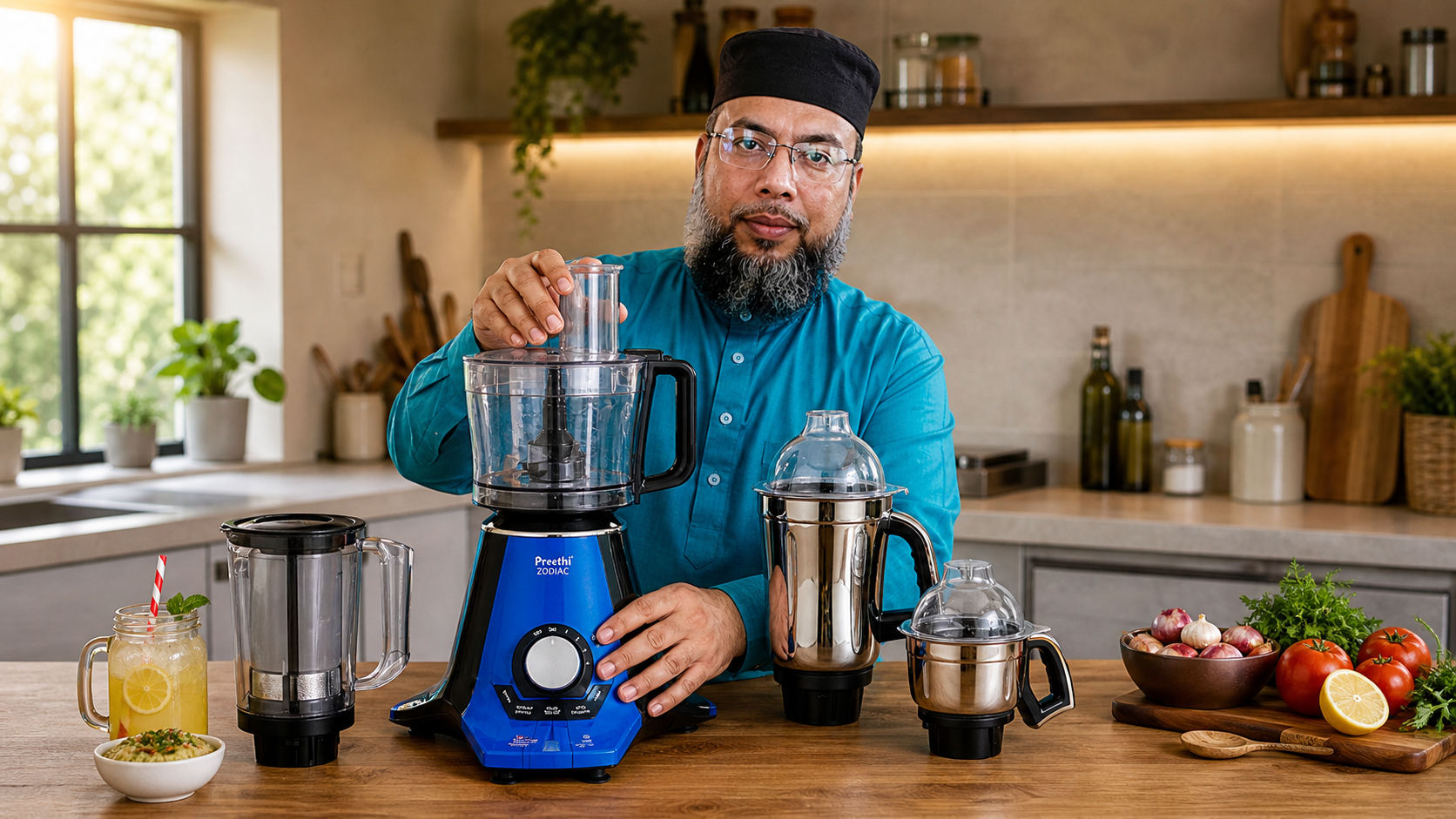
"Power without precision is just noise. Understanding wattage is the difference between a machine that lasts 15 years and one that dies in 3."
Torque vs RPM: The Hidden Truth About Power
Most buyers focus on RPM (rotations per minute) — the marketing number brands love to advertise. But for Indian cooking, torque is what actually matters. Here's the engineering breakdown.
RPM (Speed)
Rotations Per Minute
RPM measures how fast the blades spin. Higher RPM (18,000-22,000) creates finer grinding and better chutney texture. But RPM without torque is useless — the moment you load the jar with hard spices, a high-RPM, low-torque motor will stall.
Typical Range: 18,000-22,000 RPM for wet grinding, 20,000-24,000 RPM for dry grinding
Torque
Rotational Force
Torque is the twisting force that keeps blades spinning under load. This is what crushes hard cinnamon, breaks down soaked lentils for idli batter, and powers through frozen coconut. Higher wattage motors (1000W+) deliver significantly more torque.
The Formula: Torque = (Wattage × 9.549) / RPM. Higher wattage at same RPM = more torque.
Why the 750W Workhorse Still Dominates
Balanced Performance
750W hits the sweet spot for 90% of Indian households. Enough torque for daily masalas, efficient RPM for chutneys.
Thermal Efficiency
Lower wattage = less heat generation. 750W motors run cooler during extended use, reducing insulation damage.
Cost-Effective
₹2,000-4,000 price range. Replacement parts widely available. Serviceable by any local technician.
The Power Matrix: Which Wattage is Right for You?
From entry-level 500W units to commercial 2000W beasts — here's how each wattage class performs in real Indian kitchens. Use this matrix to match your cooking style with the right power class.
| Wattage | Category | Best For | Torque | RPM | Price |
|---|---|---|---|---|---|
500W | Entry Level | Basic grinding, small families (2-3 members) | Low | 18,000-20,000 | ₹1,200-2,000 |
750WTop Pick | Standard Home | Daily masalas, chutneys, occasional batter (4-5 members) | Medium | 18,000-22,000 | ₹2,500-5,000 |
1000WTop Pick | Heavy-Duty Home | Frequent batter grinding, large families, spice enthusiasts | High | 20,000-24,000 | ₹5,000-9,000 |
1100W | Pro-Grade | Daily idli/dosa batter, commercial-style home use | Very High | 20,000-24,000 | ₹8,000-15,000 |
1500W+ | Commercial | Small restaurants, catering, heavy daily use (2+ hours/day) | Maximum | 22,000-26,000 | ₹15,000-35,000 |
750W — Standard Home
Recommended- Perfect balance
- Widely available
- Serviceable anywhere
- Slower for large batches
- May stall with very hard spices
1000W — Heavy-Duty Home
Recommended- Excellent torque
- Faster grinding
- Handles large batches
- Higher power consumption
- More expensive
- Heavier
Our Top Picks by Wattage


Visual Data · SK Kutubuddin Lab Results
750W vs 1000W: The Numbers Don't Lie
15+ machines physically tested across noise, grinding speed, and heat management. The efficiency gap between motor classes is wider than most brands will tell you.
750W Standard
74
dB
Typical Indian kitchen noise
1000W Copper
68
dB
Typical Indian kitchen noise
1000W BLDC
52
dB
Whisper quiet — apartment safe
Grinding Time Comparison
Minutes to complete task ↓ lower is better
Motor Heat Over Time
Motor surface temp (°C) during continuous use
29%
Noise Reduction
BLDC vs 750W Standard
42%
Faster Grinding
BLDC vs 750W on wet batter
33°C
Cooler Motor
BLDC runs cooler at 45 min
Why 100% Copper Winding is Non-Negotiable
In the world of mixer grinder motors, the winding material is the difference between a 15-year companion and a 3-year disappointment. Here's why copper isn't just better — it's essential.
Superior Heat Dissipation
Copper conducts heat 60% better than aluminum. This means your motor runs cooler, insulation lasts longer, and you avoid that burning smell that signals motor death.
Higher Conductivity
Copper has 40% better electrical conductivity than aluminum. Same wattage, more actual power to the blades. Less energy wasted as heat.
Oxidation Resistance
Copper oxide is still conductive. Aluminum oxide is an insulator. Over years of use, aluminum windings lose efficiency while copper maintains performance.
Mechanical Strength
Copper windings withstand vibration better. For a machine that runs at 20,000+ RPM, this structural integrity matters enormously.
The Gold Standard
100% Pure Copper
Expected Lifespan
15+ Years
Copper vs Aluminum: The Real Numbers
Conductivity
100%
Copper
61%
Aluminum
Heat Dissipation
100%
Copper
40%
Aluminum
Expected Life
15 yrs
Copper
5-7 yrs
Aluminum
Cost
Premium
Copper
Budget
Aluminum
When to Consider 1100W and 1500W+ Motors
The 750W workhorse serves 90% of Indian homes perfectly. But for specific use cases, stepping up to commercial-grade wattage isn't just nice to have — it's essential.
1100W Pro-Grade
The Home Professional
Best For
- Daily idli/dosa batter preparation
- Large families (6+ members)
- Frequent coconut grinding
- Extended grinding sessions (30+ mins)
- Hard spice enthusiasts (whole cinnamon, nutmeg)
What Changes
- Heavier motor housing for stability
- Larger cooling vents
- Thicker copper windings
- Industrial-grade couplers
- Premium price: ₹8,000-15,000
"The 1100W class represents the sweet spot for serious home cooks who demand professional results without commercial kitchen infrastructure."
1500W+ Commercial
Professional Kitchens
Best For
- Small restaurants and cafes
- Catering businesses
- Daily use exceeding 2 hours
- Continuous operation requirements
- Bulk processing (1kg+ batches)
Requirements
- 16A power socket (not standard 6A)
- Dedicated circuit recommended
- Professional installation advised
- Regular maintenance schedule
- Investment: ₹15,000-35,000+
"Commercial motors are built for duty cycles that would destroy home appliances. The price premium buys you industrial-grade reliability."
The Honest Truth About Overbuying
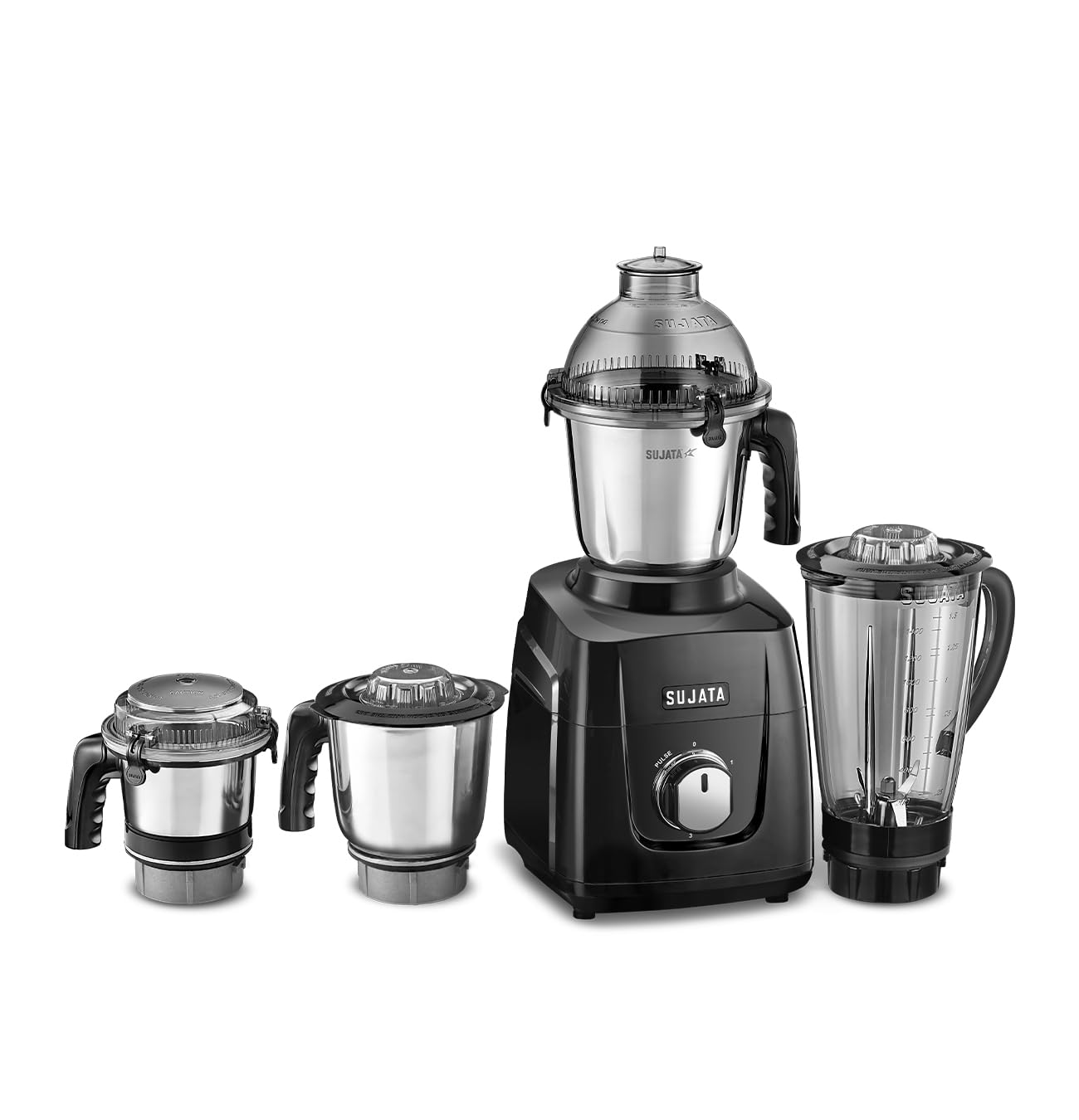
We've tested hundreds of machines. For most Indian homes, a quality 750W mixer grinder with 100% copper windings will outlast and outperform a cheap 1000W aluminum-wound unit. Don't chase wattage numbers — chase build quality. The Sujata Dynamix at 900W will grind circles around a generic 1200W machine because of its superior motor construction and coupler design.
Match Your Kitchen to the Right Wattage
Your cooking habits should dictate your wattage choice. Use this chart to find your perfect match — with direct links to our tested recommendations for each scenario.
Daily Masala Grinding
Daily (10-15 mins)
Our Top Picks
"Perfect balance of power and efficiency for daily spice grinding"
Weekly Idli/Dosa Batter
2-3x per week (20-30 mins)
Our Top Picks
"Higher torque needed for soaked lentils and rice grinding"
Daily Batter + Masalas
Daily (30+ mins total)
Our Top Picks
"Pro-grade power for continuous daily use without overheating"
Commercial/Home Catering
Multiple hours daily
"Continuous duty cycle designed for professional kitchens"
NRI/USA Usage (110V)
Varies
"Specially designed for 110V operation without power loss"
Large Family (6+ members)
Daily (large batches)
Our Top Picks
"Larger jar capacity needs more power for consistent results"
All product links use our bmgindia-21 affiliate code. We earn a small commission at no extra cost to you — this funds our independent testing.
Read our Affiliate DisclosureSK Kutubuddin Lab Test · Visual Proof
750W vs 1000W Mixer Grinder: Real-World Motor Performance Test
750W vs 1000W Mixer Grinder: Real-World Motor Performance Test
Click to watch · YouTube
Side-by-side lab test of 750W and 1000W mixer grinder motors. Noise measurement, heat profiling after 30 minutes, and grinding speed benchmarks across 4 real Indian kitchen tasks.
Source · BestMixerGrinder.com
Wattage Myths That Cost You Money
Don't fall for marketing hype. Here are the five most dangerous myths about mixer grinder wattage — and the engineering truth behind each one.
Higher wattage always means better grinding
A 750W copper motor outperforms a 1000W aluminum motor. Build quality, blade design, and jar geometry matter more than raw wattage.
You need 1000W+ for idli batter
Quality 750W machines handle batter perfectly. What matters is continuous run time and cooling, not just wattage. The Sujata Dynamix at 900W is a batter champion.
Higher wattage = more electricity bill
Higher wattage motors complete tasks faster. A 1000W motor might use less total energy than a 750W motor because it finishes grinding in half the time.
Commercial motors are just bigger versions of home motors
Commercial 1500W+ motors use entirely different architectures: ball bearings instead of sleeve bearings, continuous-duty windings, and thermal protection systems.
RPM is the most important number
Torque matters more for Indian cooking. A motor with 18,000 RPM but high torque will outperform a 24,000 RPM motor that stalls under load.
Continue Your Research
Wattage is just one piece of the puzzle. Dive deeper into our specialized guides to make the most informed purchase decision.
Complete Buying Guide 2026
Beyond wattage: jars, motors, serviceability, and everything else you need to know.
Best 750W Mixer Grinders
Our top 5 picks in the most popular wattage category, tested and ranked.
Heavy-Duty for Idli Batter
Specialized guide for South Indian cooking and daily batter preparation.
Sujata Dynamix DX Review
Deep dive into India's most trusted 900W workhorse motor.
Ready to Choose Your Power Class?
Now that you understand the science of wattage, torque, and copper windings, it's time to find your perfect match. Start with our curated recommendations for each power class.